By Analyst Team · Updated 2026-07-12 · 12 min read
If you've ever felt frustrated by skyrocketing cable bills, limited channel options, or the sheer clutter of set-top boxes and wires, you're not alone. An IPTV box has emerged as one of the most compelling alternatives for cord-cutters worldwide. This complete guide cuts through the marketing noise to give you a genuinely useful, no-nonsense understanding of what an IPTV box is, how it works, whether it's right for you, and how to get started without falling into common traps. We'll cover everything from live sports streaming to multi-TV setups, backed by real-world insights.
LIMITED TIME AVAILABILITY
Unlock Full IPTV Box Access
Unlock complete high-definition information and priority access packs. Lock in your pricing model today before plans return to standard regional metrics.
What Is an IPTV Box Exactly?
A IPTV box is a hardware device that connects to your television and the internet, allowing you to stream television channels and on-demand content over IP networks rather than through traditional cable or satellite signals. Unlike a standard cable box that receives broadcast signals via coax cables, an IPTV box pulls video content from the internet using your home broadband connection.
These devices run on specialized operating systems—most commonly Android TV, Linux, or proprietary firmware—that are optimized for video playback. Key components include a processor (often a quad-core or better), RAM (typically 1GB to 4GB), storage (8GB to 64GB), Wi-Fi and Ethernet connectivity, and video output ports like HDMI. The box itself is a small set-top unit that decodes encrypted streams and delivers them to your screen in resolutions from 720p up to true 4K.
The IPTV box ecosystem also includes related entities like middleware (the software interface you navigate), EPG (Electronic Program Guide for schedules), and of course, the IPTV subscription service that provides the actual channel lineup. Without a valid subscription, the box itself is essentially a very expensive paperweight.
How an IPTV Box Works Step by Step
Understanding the technical flow helps you troubleshoot issues and make better purchasing decisions. Here's the step-by-step process that happens every time you press "play" on your IPTV box:
Step 1: Internet Connection. Your IPTV box establishes a connection to your home network via Wi-Fi or Ethernet. A wired Ethernet connection is almost always more stable for 4K streams.
Step 2: Authentication. The box communicates with your IPTV provider's server. Your unique username and password (or MAC address) are verified against active subscription records.
Step 3: Channel List Retrieval. Once authenticated, the server sends a playlist—usually in M3U or M3U8 format—containing all channels and video-on-demand titles available in your plan.
Step 4: Stream Initiation. When you select a channel, the box connects to a streaming server using protocols like HLS (HTTP Live Streaming) or RTMP. The server sends the video in small chunks, which the box buffers and decodes.
Step 5: Playback. The decoded video is output through HDMI to your TV. The box continuously requests new chunks, creating a seamless viewing experience. This is why internet speed and stability are critical—a slow connection means buffering.
Concrete Benefits of Using an IPTV Box
Cost Savings. The most immediate benefit is financial. A typical IPTV subscription with hundreds of channels and VOD content often costs $10-$30 per month, compared to $100-$200 for traditional cable. The hardware itself is a one-time purchase ranging from $30 to $150, depending on features.
Flexibility and Variety. An IPTV box gives you access to international channels from virtually any country. If you miss programming from your home country or want niche sports networks, IPTV delivers options rarely available through conventional providers.
On-Demand Library. Most subscriptions include extensive VOD catalogs—movies, TV series, documentaries—updated regularly. You're not limited by a broadcast schedule.
Multi-Device and Multi-TV Support. Many providers allow simultaneous streams on multiple devices from a single subscription. This means you can watch on your living room TV, bedroom TV, tablet, and smartphone at the same time, making it ideal for households with varied viewing preferences.
Secure special promotional rates instantly before the window closes.
Activate Your IPTV Box Subscription Now →Honest Limitations You Should Know
No technology is perfect, and IPTV boxes come with real drawbacks. The most significant is legal uncertainty. Many IPTV services operate in a gray area or outright illegally by streaming copyrighted content without proper licensing. Using such services can expose you to legal risks, including ISP warnings or, in rare cases, fines. Always verify that your provider has proper licensing for the content they offer.
Buffering and Reliability. Unlike cable, which works regardless of internet conditions, IPTV depends entirely on your broadband connection. Peak evening hours, ISP throttling, or a weak Wi-Fi signal can cause frustrating buffering during live sports or important moments.
Technical Complexity. Setting up an IPTV box requires more technical know-how than plugging in a cable box. You may need to configure network settings, install third-party apps, sideload APKs, or tweak buffer sizes. It's not plug-and-play for everyone.
Service Reliability. IPTV providers can disappear overnight. Unlike established cable companies, many IPTV services are small operations that may shut down without notice. Regular backups of your provider's DNS or portal URL are wise.
Pros
- Significantly cheaper than cable
- Thousands of international channels
- No long-term contracts required
- 4K and HDR streaming support
- Multi-device simultaneous viewing
- Vast on-demand movie and series library
Cons
- Legal and copyright uncertainties
- Dependent on internet stability
- Buffering during peak hours
- Setup requires technical patience
- Providers may shut down suddenly
- Limited customer support options
IPTV Box vs. Alternatives: Which Is Better?
How does a dedicated IPTV box stack up against popular streaming alternatives like the Amazon Fire Stick, Roku, and Android TV boxes? The comparison table below breaks down the key differences.
| Feature | Dedicated IPTV Box | Amazon Fire Stick | Android TV Box | Roku |
|---|---|---|---|---|
| Price Range | $30 - $150 | $25 - $55 | $30 - $200 | $30 - $100 |
| IPTV App Support | Excellent (native) | Good (sideloading) | Excellent (native) | Limited |
| 4K / HDR | Yes (most models) | Yes (4K Max) | Yes (high-end) | Yes (select models) |
| Ethernet Port | Often built-in | Adapter required | Often built-in | Some models |
| Ease of Setup | Moderate | Very Easy | Moderate | Very Easy |
| Multi-TV Setup | Excellent | Good (per stick) | Excellent | Good (per device) |
The key takeaway: a dedicated IPTV box excels when your primary use case is IPTV streaming with heavy emphasis on live sports, international channels, and multi-TV setups. The Fire Stick is more versatile for general streaming (Netflix, Prime Video, etc.) but requires sideloading for many IPTV apps. Android TV boxes offer a good middle ground, while Roku is least friendly toward third-party IPTV services.
Who Is an IPTV Box For?
Cord-Cutters. If you've canceled cable but miss live TV, sports, and news, an IPTV box fills that gap without expensive contracts.
Sports Enthusiasts. The best IPTV box for live sports delivers high-bitrate streams with low latency, often including premium sports packages that would cost hundreds separately.
International Viewers. Expatriates and multicultural households benefit immensely. An IPTV box can deliver channels from India, the Middle East, Latin America, Europe, and Africa—all in one interface.
Multi-TV Households. For families with multiple televisions, a single IPTV subscription with multi-room support is far more economical than paying for additional cable boxes per TV.
Budget-Conscious Viewers. If you want maximum channel count for minimal monthly spend, IPTV boxes offer the best value proposition in the streaming landscape today.
How to Get Started with an IPTV Box: 7 Practical Steps
Ready to dive in? Follow these numbered steps for a smooth setup experience:
Step 1: Choose Your Hardware. Decide between a dedicated IPTV box, an Android TV box, or using a Fire Stick. For the best IPTV experience, look for at least 2GB RAM, quad-core processor, and built-in Ethernet. A cheap IPTV box with WiFi can work, but wired connections are far more reliable for 4K streams.
Step 2: Select a Reputable Provider. This is the most critical decision. Look for "IPTV subscription no contract" options that offer free trials. Test the trial thoroughly during peak evening hours—if it buffers then, it will buffer later. Read independent reviews on forums like Reddit (r/IPTV) rather than relying on vendor websites.
Step 3: Connect Your Box. Plug your IPTV box into your TV via HDMI. Connect to your router using an Ethernet cable if possible, or connect to Wi-Fi. Power on and complete the initial setup wizard.
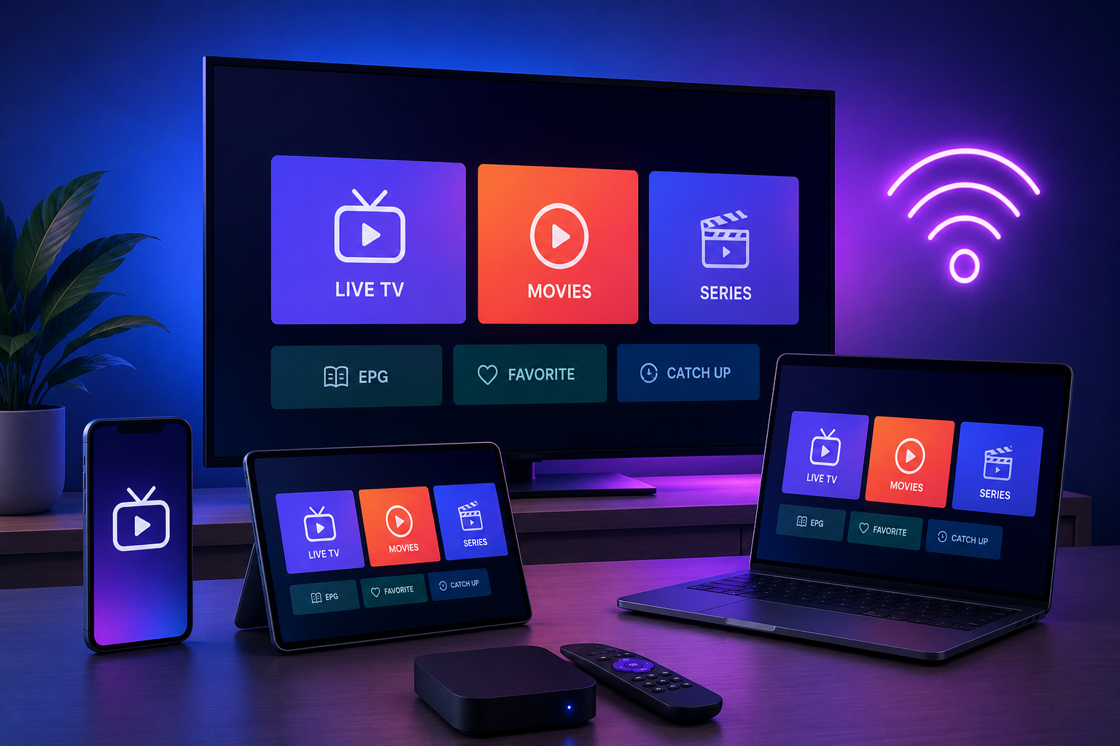
Step 4: Install an IPTV Player App. Popular options include TiviMate, IPTV Smarters Pro, XCIPTV, and OTT Navigator. These apps are available on the Google Play Store or can be sideloaded as APK files.
Step 5: Configure Your Subscription. Your provider will send you login credentials, a portal URL, or an M3U playlist link. Enter these details in your chosen IPTV player app. The app will populate your channel list and VOD library.
Step 6: Optimize Your Settings. Go into the player's settings and set buffer size to "Large" or "Very Large" to minimize buffering during live events. Enable hardware decoding for smoother playback. Set your preferred video player (VLC or ExoPlayer usually perform best).
Step 7: Test and Troubleshoot. Channel surf for 15-20 minutes. If you encounter black screens, try different apps or contact provider support. For persistent buffering, check your internet speed (25 Mbps minimum for 4K, 10 Mbps for HD).
Final Subscription Window:
Main Offer Today →Affiliate Disclosure: Clicking this secure link verified by our network supports our team through standard partnership terms at zero extra cost to your invoice.
Frequently Asked Questions
What is the best IPTV box for live sports streaming?
The best IPTV box for live sports needs a powerful CPU for smooth high-bitrate decoding and low-latency network options. Models with Gigabit Ethernet, at least 2GB RAM, and quad-core processors like the Amlogic S905X4 perform exceptionally well. Look for boxes that support TiviMate or XCIPTV with customizable buffer settings. A wired Ethernet connection is strongly recommended over Wi-Fi for live sports to minimize delay and buffering.
How do I set up an IPTV box for the first time?
To set up an IPTV box, start by connecting the box to your TV via HDMI and to the internet via Ethernet or Wi-Fi. Power on and complete the initial Android or Linux setup. Next, download an IPTV player app like TiviMate or IPTV Smarters Pro from the Play Store. Enter the credentials or playlist URL provided by your IPTV subscription service. Finally, adjust buffer size and video player settings in the app for optimal performance. Most setups take 15-30 minutes.
Is an IPTV box better than a Fire Stick?
The IPTV box vs Firestick decision depends on your priorities. A dedicated IPTV box typically offers better native support